

The sense of life is to grow yourself through constant sacrifices, while doing it playfully.
-- Jordan B Peterson
Life consists of real problems to solve, and those who can solve them better usually thrive.
But how to struggle with real problems through play? Well, we build stories and that’s an amazing concept, but I can think of another example, which is gaming.
In this letter, I’ll talk about the concept of gamifying wealth generation, but you can apply this to any important problem you face, and try there.
About a little idle game
Let me tell you a story.
There is a mobile game, named “The Tower” - straightforward idle game, where the goal is to perform recurring runs defending your tower from incoming enemies. After each run you’ll inevitably loose at some point, you use the earned coins to upgrade the tower a bit and try again against harder waves.
Classic loop. Nothing fancy.
So why bring it up?
Because in this game, there are 8 (eight!) different currencies to manage:
Cash
Coins
Stones
Cells
Module Shards
Reroll Shards
Keys
Time
Each currency is earned differently. Each unlocks different upgrades. And each affects overall progress in non-obvious ways.
Still, though, what’s the point?
That complexity doesn’t repel players.
It attracts them. Why?
Because the game provides:
Clear feedback loops
Visible progress
Community strategies
Step-by-step optimization paths
People have essentially solved the game.
Kids. Teenagers. Non-technical adults.
Some of them run spreadsheets more complex than small businesses!
When it was shown to me that’s when it hit me:
Why can people master insanely complex games - yet struggle so badly with real life?
And here is why.
Why people struggle in life, while perfecting their games?

The same people that can optimize every single asset to built the best empires or collect most powerful equipments in-games, struggle with getting rich in real life.
Have you ever wondered, why?
We play games of all sorts, solving different problems, from puzzle-like, through calculations and cryptography, through economical optimizations and strategical thinking, to memory and pure action-like quick reflexes.
All that require effort, and usually we don’t care - we have fun by doing so. In games, effort feels light. Even enjoyable.
That’s sth I find extremely interesting and inspiring, so I’ve decided to use this concept and adapt it to a real-world problem, of wealth generation.
This is provoked me to ask a few questions, mainly: What’s the difference, between people playing economy-based game, vs real-life asset accumulation?.
The unconfrotable answer
Life is a badly designed game.
And humans prefer to play games that are designed well.
10 things that games & life have in common.
Good games reward us for the same behaviours, that life does:
Patience, gratitude, emotional control, learning from mistakes. Look around.
Study the behaviour of successful people and you’ll see some patterns.
They understand what actually matters to make progress fast.
Here are a few game principles that games and life share - and most people ignore:
Skill > Luck over time
Assymetry is the real game
Resources allocation beats the raw effort
Meta knowledge separates elites from the rest.
Progress is non-reversible until it is.
Identity drives outcomes
Long-Term players win
Most people quit early
Let’s deep dive into them! 👇
. Compounding Is the Core Engine
Nothing meaningful is linear. Look at games. XP, skills, gear, territory, influence all compound.
If you already block 98% of incoming damage, an extra 1% doesn’t reduce damage by 1%. It cuts what’s left in half. That’s compounding.
In life, if you’ve 50% income for expenses, doubling expenses means 1.5x more money available for investments. That’s the same math applied.
XP feels slower at higher levels because the progress bar stays the same while the required points explode. Progress didn’t slow - your scale did.
Life works the same way!
Earning first $100k takes forever, but second? It’s way easier. The jump from $1M to $10M is only 10x. While getting your first million if you have a dollar? One million times.
The compounding effect gets crazy when it comes to your health, reputation and network too. Help enough people for long enough and the effect becomes exponential.
Here is a useful rule to Remmber:
Small advantages held long enough dominate big advantages held briefly.
Unfortunately, people quit both right before compounding starts to matter.
2. Early Progress Is Boring by Design
Every system tests patience first. You start with a grind.
Posting daily for a year.
Mining diamonds by hand in Minecraft.
Most of the information and possibilities are hidden from you.
You know nothing, you don’t have an idea how to optimise, your tools are weak & cheap. You’re forced to do repetitive quests.
In Real life, you start with low income, low savings, low returns, and invisible progress.
Games simplify feedback. Even when progress is slow, you can measure it. Life doesn’t give you that luxury. Slow feedback gets mistaken for wrong direction.
Veterans, however know, that the early phase is not about winning - it’s about surviving long enough to scale.
3. Skill > Luck Over Time
Luck matters short-term. Skill dominates long-term.
You can win once by luck. You can’t win consistently without skill. That’s why professionals don’t rely on luck - especially when stakes are high.
They build skills so that when opportunity shows up, it becomes leverage.
Markets follow the same rule. Builders, disciplined investors, and operators destroy gamblers over time.
If you want to be successful, remember:
Variance hides skill in the short run and reveals it in the long run.
Most people confuse a lucky streak for mastery - then blow up. This is extremely visible among the crypto market degenerates. 95-98% of traders here looses in long term! How crazy is that?
They all believe they’re so skilled and smart, and yet, they loose life savings without understanding the math of probability. Every here and there one person gets lucky, and earns tons of money, and masses confuse that with a mastery.
Completely ignoring the fact, that every time someone else succeeds.
To win, work on the skills and just use luck when it happens, never depend on it.
4. Asymmetry Is the Real Game
Maybe you have heard a term: unfair advantage. What they mean, is assymetry.
Most of us have something that gives us a unique starting point for any effort we take. Most of good games will also use this trait. You start with different, and the goal is to use this for you advantage.
Both life, and games, reward smart positioning, not equal effort. In games you can exploit mechanics, stack multipliers together, build synergies between different elements or classes.
In real economy, you can optimize taxes, use the loans, build scalable products, create multiple tiers of your business to apply upselling to existing clients...
When you think about health:
you can take supplements,
go to the gym,
complement it all with a proper diet,
add profilactic physiotheraphy on top,
and have healthy relationships...
and all those results will start to compound without you even knowing how and when.
If you understand this, you’ll quickly realize, that grinding harder is inferior to finding better multipliers!
This is why grinding is overvalued. Some grind is necessary, but pros are looking for assymetries, amateurs keep grinding.
5. Resource Allocation Beats Raw Effort
You always have limited resources. Always.
In games, you may need to balance time, stamina, mana, gold, inventory slots or whatever else game will support.
Life hides it though!
Thinks like time, energy and money are more or less obvious.
The reset most of people NEVER NOTICE!
For example, everybody is fighting for our attention. We leave in the world of constant distractions, and our attention is crucial if we want to achieve our life goals. We also should fight for it and we have the best capabilities to do so.
Another, often unnoticed currency is trust. You build your credibility by consistently showing up where others give up. This is why people tell you: “post everyday, it’ll change your life”. It’s not about posting, but building trust, which takes time.
But energy & attention is a resource, you need to manage very carefully, therefore
Saying no is as important as acting.
Bad players spend resources reactively. Good players invest them deliberately.
Where to allocate resource though?
6. Meta-Knowledge Separates Elites
Chances are you’ve heard about Minecraft, even if you haven’t played yourself.
There are multiple classes of players.
Newbies - try it out, play occasionally
Amateurs - play for fun, optimize & automate to some extent, but not pressure.
Professionals - use extra tools, play for living, speed up through early game to have real fun without resources limitations.
Gods - world champions in speedruning, technical geniuses, and so on. They constantly break the game, and developers look for such people to find bugs to patch.
The Level 4 people are reading the source code of Minecraft and build communities of hackers, spending days and nights looking for ways to cheat the system.
The difference between them and normal professionals is unbeatable. They know exactly how the game works under the hood. They track patch notes and code changes. They attend events and hard-test everything that comes out, looking for exploits to use in own favor.
This is the real advantage. Knowing how the system works, not just playing inside it.
That gap is unbridgeable through effort alone.
How to use it in wealth building?
If 98% of crypto traders lose, I don’t “try harder.” I study why. I analyze behavior, psychology, cycles, inflows, incentives. I build systems that exploit impatience and emotion. I am aware of cycles and aware of how long-term game favours the players.
The Key point here, is that Rules aren’t neutral. They favor certain behaviors.
Elites study why the rules exist, and they deploy behaviours that increase the probability to win.
7. Progress Is Non-Reversible Until It Is
When you rush for progress, you level up - until you die or get wiped.
In games, you’ll manage risk, by looking for players with similar skill set, to maximize profits while minimizing the chance to fail. Games will punish you with permadeath, resets, gear loss or XP progress drop when you make mistake.
Catching up will cost you time.
In real wealth building, mechanism is very similar. Knowing that money makes money, you want to avoid bankruptcy, reputation damage, debts.
Knowing that you need energy spread across time, you want to avoid health collapse, and avoid extreme risks of accidents or contusions.
That leads us to a very important lesson:
Defense matters more than offense.
Even in Chess, where it’s way easier to attack than to defend, ability to know where to take a draw is crucial to progress to higher ranks.
Staying in the game beats bold moves that risk elimination.
However, not everyone can defend in the exactly same way.
8. Identity Drives Outcomes
One more shared trait of life and games is knowing that who you become determines what you can access.
In games, usually this is solved by guilds memberships, professions, races, reputation. Over time you develop a build in the certain direction, that determines your strategy.
In order to access everything, you are forced to work on collaborations.
Life is no different.
In wealth building you invest your time into skill stack, networking with people you choose, and resources you accumulate. It is very similar to what you have in games, just you can’t start a new character from scratch as easily. Commitment compounds.
Most people will fall into the trap of looking at one very successful character, and immediately try to copy that. It doesn’t work.
You don’t get rich by doing rich-people actions once.
You get rich by becoming someone for whom those actions are normal.
And that’s only possible through a long-term commitment.
9. Long-Term Players Win
Long term players always win. The question is by how much.
Both - games and life - punish short-term thinking brutally. To show you the difference, here is a chart of unrealized profits for long-term hodlers of Bitcoin.
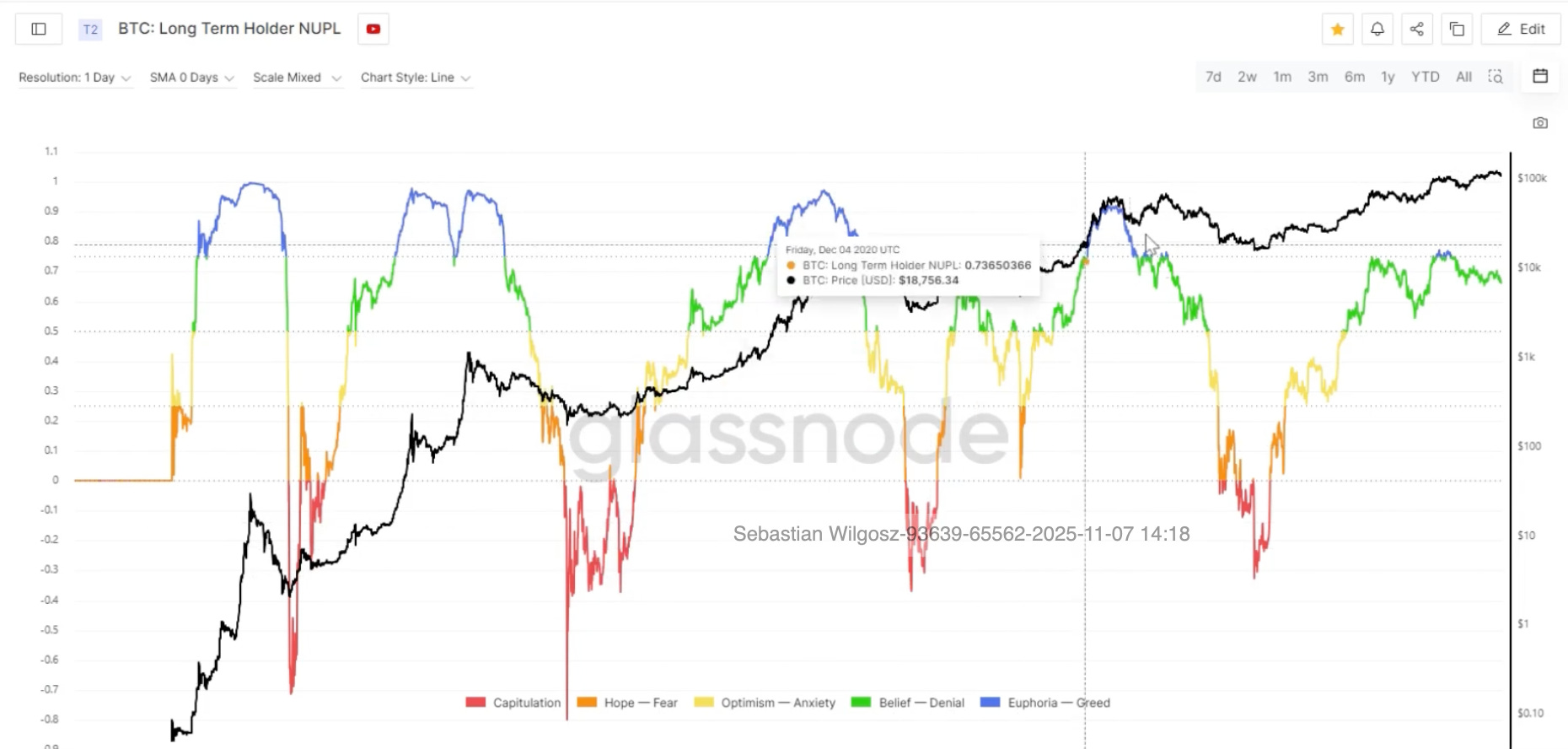
Green means that a lot of wallets holding Bitcoin for a long time is in almost constant belief or euforia (blue). There are very short periods, where Bitcoin’s price drop low enough that most of long-term hodlers is on loss.
Now if we’ll compare that to short-term hodlers, you won’t believe. They’re almost never on profit. They live in constant fear, anxiety and depression, with very, very short periods of minimal profits just to get back to emotional hell again.
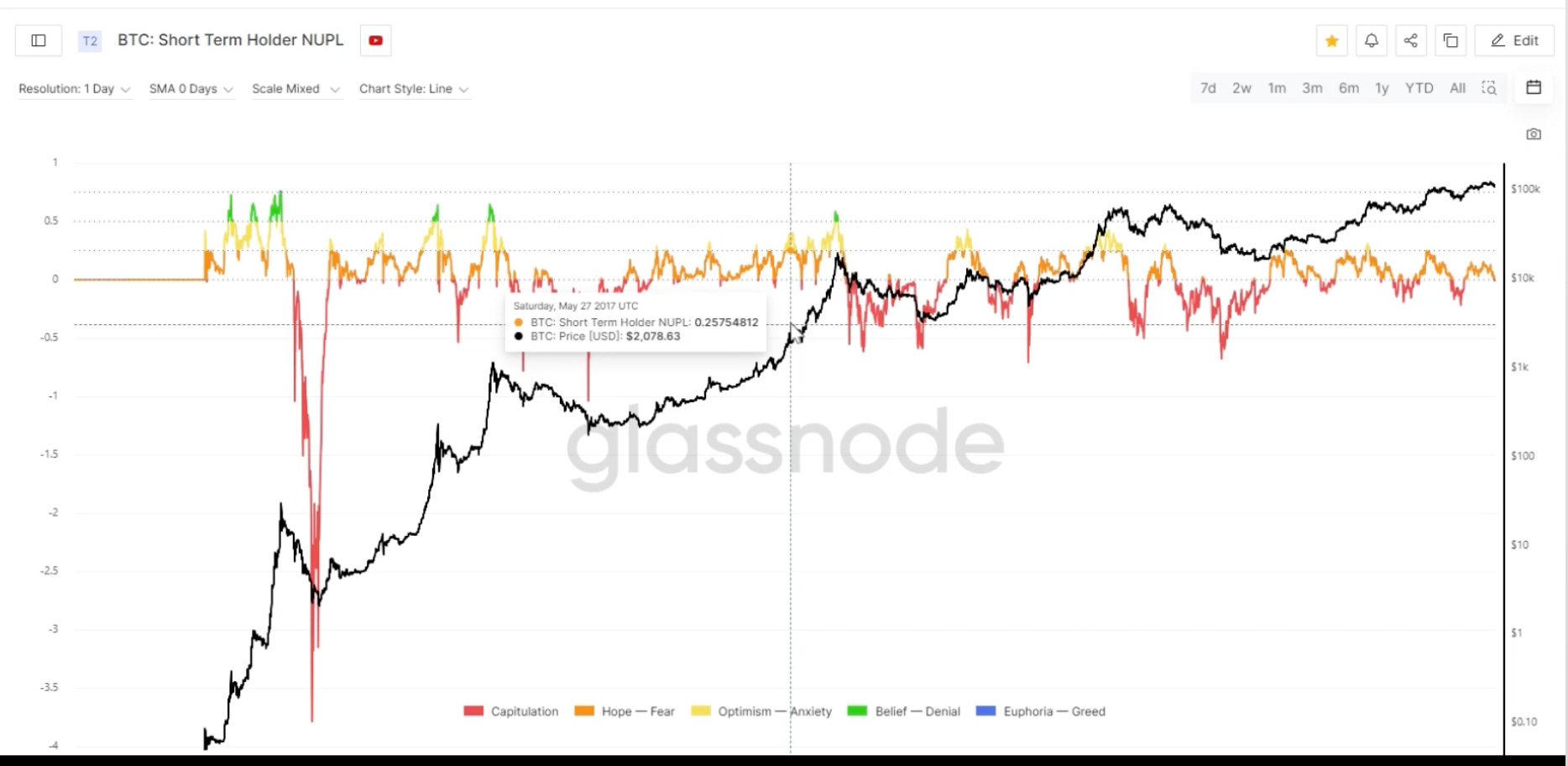
All that makes us to the very simple and important truth.
Speedrunning works only if you already mastered the game.
Shortcuts work only if you can survive it.
Remember. Time in the game > timing the game.
Knowing this will almost ensure your success, because most people will not stay.
10. Most People Quit Early
This is the biggest shared mechanic. In every single ongoing effort, most people will drop off.
On the X platform, only 0,05% of accounts have more than 1k followers. Not because its impossible, but because it’s uncomfortable, unclear, and unglamorous early on.
Games mask this with dopamine spikes every once a while, life doesn’t.
It’s even more cruel, hiding from you everyone and everything who is unsuccessful. Social media will only show you posts with dozens of comments and hundreds of likes.
Restaurants shows you only people who are able to go there and eat outside.
Everything that is out of the bubble is hidden for you, leaving you with the impression you’re not doing ok.
And there is no cure for that.
Life is just a badly designed game.
But once you understand the mechanics, you can build a game inside it — and win.
Stay in the game.
The game is simple. People make it complicated and confuse rules together, making it hard for them.
You don’t need to.
Stay in the game. Learn the rules. Stack advantages.
That’s how you win - quietly, predictably, and without drama.