

You’ve just bought a new game called Minecraft. You’re excited and want to try it out. You log in, and enjoy the virtual world of endless possibilities...
But there’s a catch. To build anything, you need materials — and chopping a tree takes forever with your bare hands.
And you need to hurry up, because every 20 minutes the night comes and the world fills with monsters that will kill you in one hit.
That means whatever you want to collect, you’ll face the same set of problems:
Weak tools.
Lack of useful materials.
Options are very limited.
Everything takes forever.
Your progress is constantly interrupted — or reset — by the threat of dying.
This is what the early game looks like. You know there are endless possibilities, but to get there you have to push through real struggle: repetitive tasks, grinding for resources, slowly building survivability to the point where progress can actually stick.
It’s boring, and it’s intentional.
Most people will quit.
Most people will quit.
For any ongoing effort, most people quit. People aren’t used to working on the same thing for a long time. You can see it everywhere.
Most people quit the gym before January ends.
Most people can’t keep up a diet.
Most people won’t consistently save money.
Most people won’t publish daily for years.
It doesn’t matter what you pick — the data is always the same. Most people quit.
So if you want to build a product for recurring buys, what do you do?
As a system designer, you want to make them quit early.
Focus on long-term players
It may sound harsh, but it’s nothing personal. Game designers want to entertain players — but the real key to funding future games is keeping the game alive long enough to make money.
If most players quit early, spreading resources across everyone is a waste.
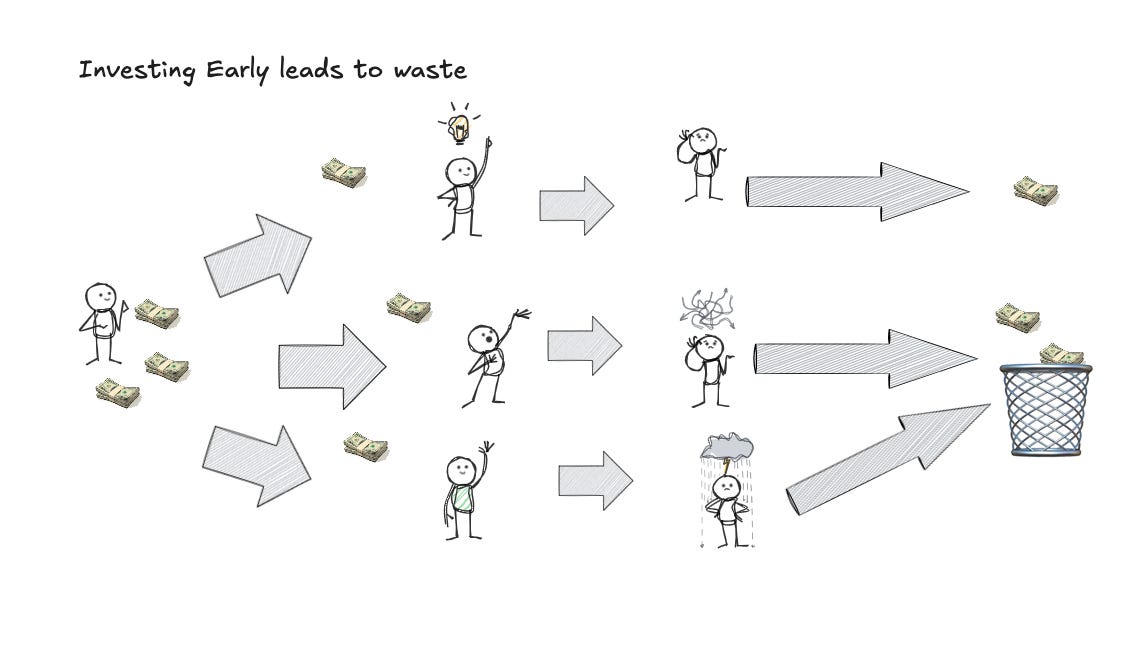
Filtering out players who won’t stick around is smart resource allocation, not cruelty.
And this is why every system tests patience first. You start with a grind.
Posting daily for a year.
Mining diamonds by hand in Minecraft.
At the start, most information and possibilities are hidden from you. You know nothing, you have no idea how to optimize, your tools are weak and cheap. You’re stuck doing repetitive tasks.
In real life, you start with low income, low savings, low returns, and invisible progress.
Nobody wants to collaborate with you yet, because there’s a good chance you’ll quit. Collaborators and investors run the same test - patience first.
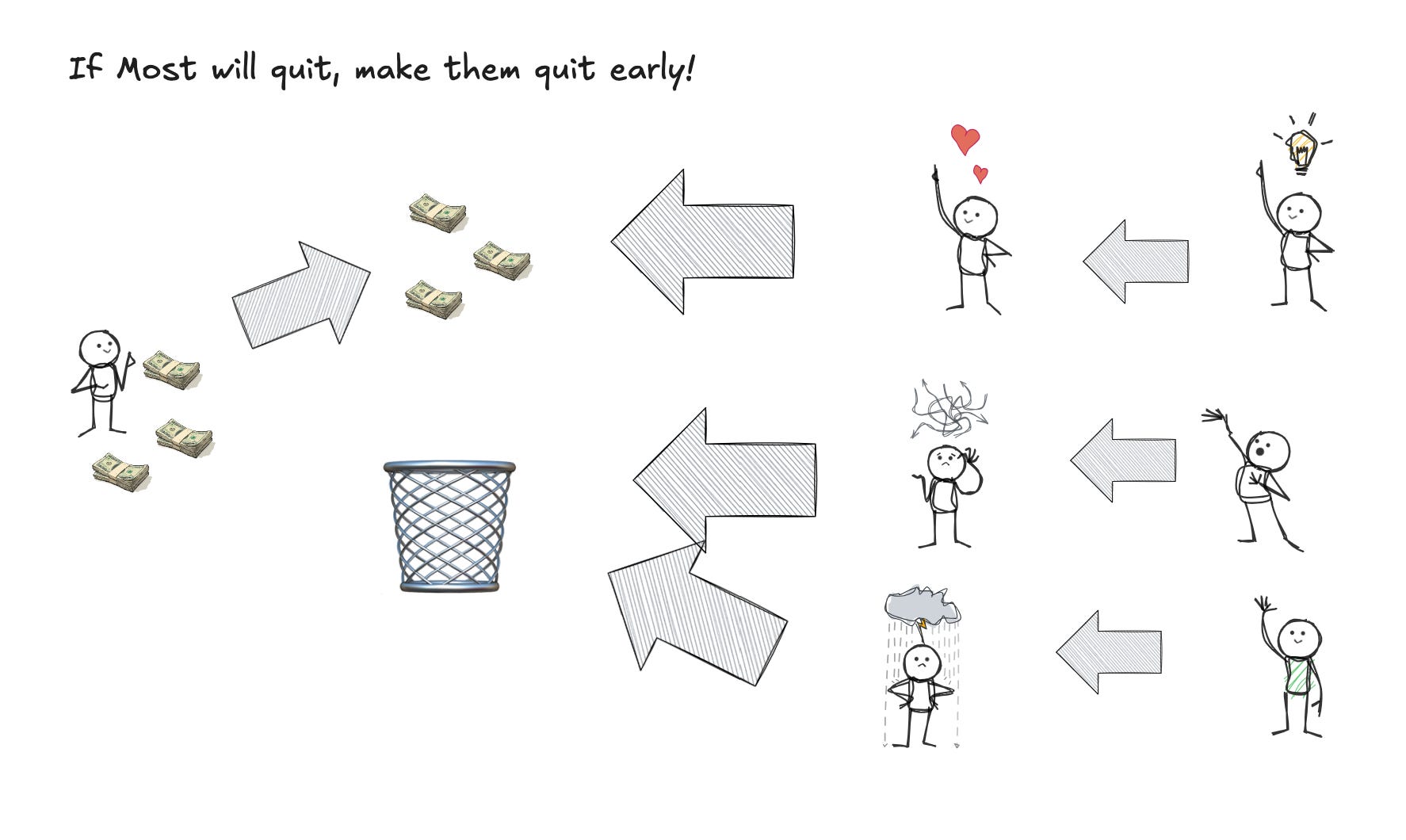
Exactly like in games.
Early game is about surviving
Games simplify feedback. Even when progress is slow, you can measure it. Life doesn’t give you that luxury — most of us lack the metrics to look back at, and that’s how slow feedback gets mistaken for the wrong direction.
Veterans know the early phase is not about winning — it’s about surviving long enough to scale.
Here’s part of a conversation with another Substack creator, when I offered a small collaboration. It shows exactly what I mean.
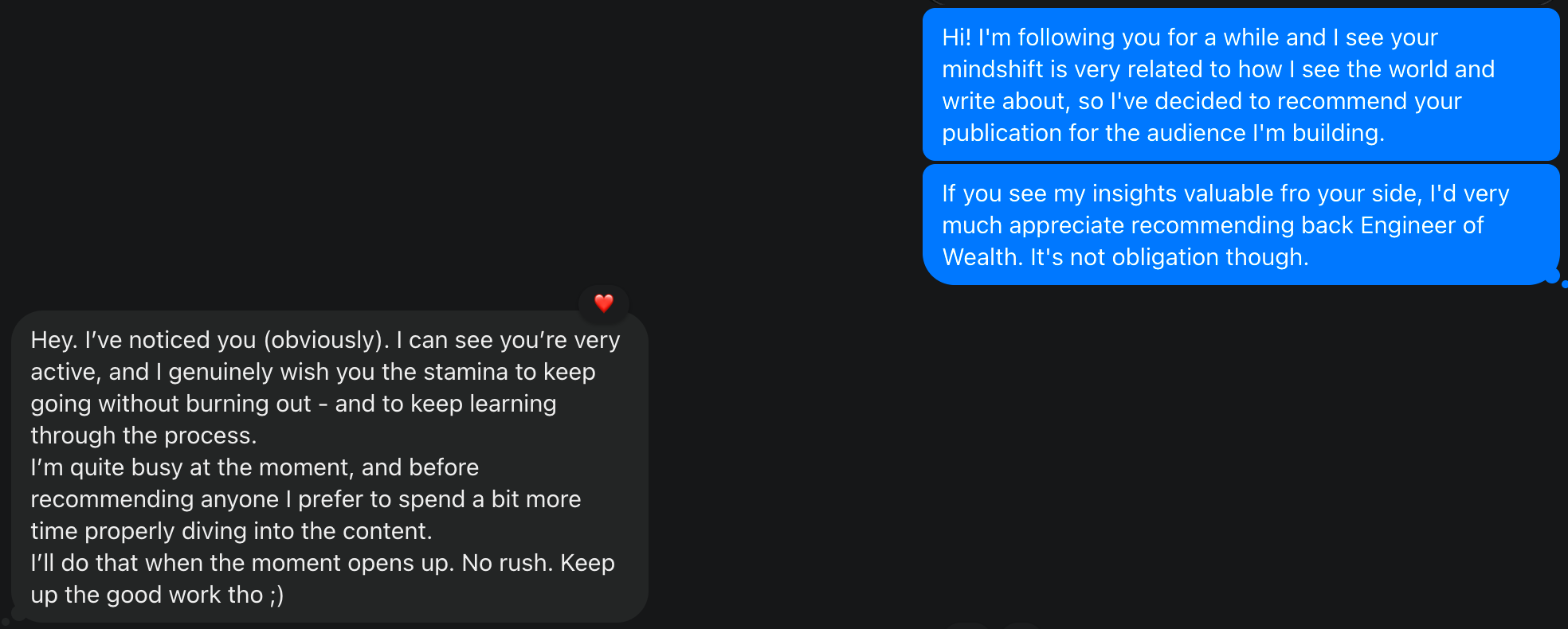
If someone wants to work with you, they’ll first check whether you’re going to stick around. Do you have content? Do you publish consistently? Are you making progress?
In the end, the most valuable asset anyone has is time. And successful people do not want to waste it.
How to not get bored early
So here is the real question. How to not get bored?
The short answer: stop expecting not to be bored.
Early game is designed to be boring and that’s the point! That’s the filter. Once you accept this as a feature - not a signal that something is wrong - you’ve already won half the battle.
But there are also practical moves that make the grind survivable.
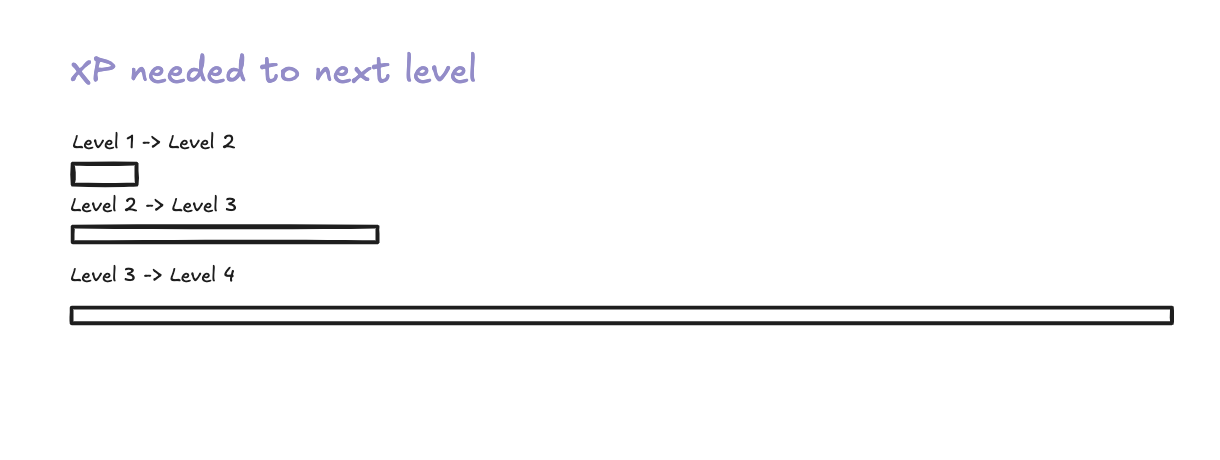
Build your own XP bar.
Games track progress for you in their own interest! Not yours. Life doesn’t track it at all. That’s why slow progress feels like no progress at all.
The fix is simple: create your own metrics.
Track the number of articles published.
Track subscribers, even when it’s 12.
Track the streak.
When you track nothing in life, you also mine blind.
I track my Substack growth every month. At 25 subscribers, it looks ridiculous. But 25 > 12, and that’s movement. In a game, that number would show on a progress bar. You’d feel it. In real life, you have to build that bar yourself.
And you may set up some little milestones to reach, that are achievable relative to where you are right now!
Play the meta, not the session.
Session-by-session thinking will destroy you. One bad night of dying to creepers looks catastrophic. But zoom out to the map you built over three months, and the single death doesn’t matter.
Same in life. One bad week with no readers, no sales, no traction. Or one week of being sick, resulting in no publication. That feels like failure.
But ask a different question: are you more capable than three months ago? Do you have more content? More proof of work? Then you’re leveling up. The session was bad. The character is stronger.
Optimize the grind.
You’re an engineer. Use it. Or if not, use other engineers’ minds.
If something is boring, the answer isn’t to quit - it’s to find the most efficient path through it. In Minecraft, you don’t hand-mine coal forever.
Instead, you craft better tools, you build a furnace, you auto-craft coal from wood - and automate the whole process. You design a mining system.
The same logic applies in reality.
What can you template?
What can you batch?
What removes friction from the boring work?
You’ll be surprised how much of the early grind can be systematized - and how much less painful it becomes once you’re solving the system instead of suffering through the task.
Find other players at the same level.
Solo grinding is the hardest mode.
The Substack creator from that screenshot tested my consistency before investing time in collaboration. That’s actually the right instinct - but it also reveals something important. Other people at the same stage of the game are rare, and valuable.
You don’t look for players far ahead of you. They’re the most visible, but at the same time, they’ll make YOU feel invisible.
You don’t look for players behind you. They’ll pull your focus backward. People grinding through the same early phase - people who understand why 25 subscribers feels simultaneously tiny and meaningful - those are the ones worth finding.
They’ll hold you accountable. They’ll celebrate your first $27 sale as if it were $27,000. Because they know exactly what it took to get it.
Remember what you’re building.
Not the business. The character.
In every RPG, the hero’s journey is boring before it’s epic. But the players who make it aren’t the ones who are never bored. They’re the ones who understand what the boring is building toward.
Early game is character creation. It’s the part of your story that makes the later chapters meaningful. If you skip it or quit it, the rest of the story has no weight.
The game is designed this way on purpose. Not to punish you. Not because the designers are cruel.
Because the destination only means something to those who walked the whole path.
Keep mining.
I actually liked the directness, the honesty, and the realistic view of what’s happening around us. That part really resonated.
And honestly… I’m getting a bit allergic to growth accounts lately. There are just too many. And they keep multiplying because the demand is huge... everyone’s chasing shortcuts...
The Minecraft analogy was surprisingly good. At first I was like, “wtf, not my type of game.” But the comparison worked.
Keep collecting those unique ideas and dressing them in the clothes of real growth. It catches attention.
P.S. I recommended your page back on mine as well.
I love the way you described Minecraft! I played it as a kid too, right when it first came out. I think there was even a big server called Templecraft, if I’m not mistaken. All of this brings back so many memories!
And this "keep mining" in the end is what i've needed!