

A few years have passed since the AI boom started. What have you noticed? Has anything changed in your perception? Please share your thoughts in the comments. I WAS scared - and excited at the same time. Now let me tell you what changed on my side.
It won’t be long, but may calm you down if there is some sort of anxiety you still suffer from.
How I perceived the boom at first
As a software engineer, I’ve been observing the sudden adoption of AI tooling among developers from a front-row seat. I read tech newsletters, I talk to tech friends, and most importantly, I work at a world-class FinTech company that made a heavy bet on AI training and tool investments. As I already covered in Vibe Coding is Over, it happened that I was in the group of people who adopted AI assistance the quickest, and to the highest level out there.
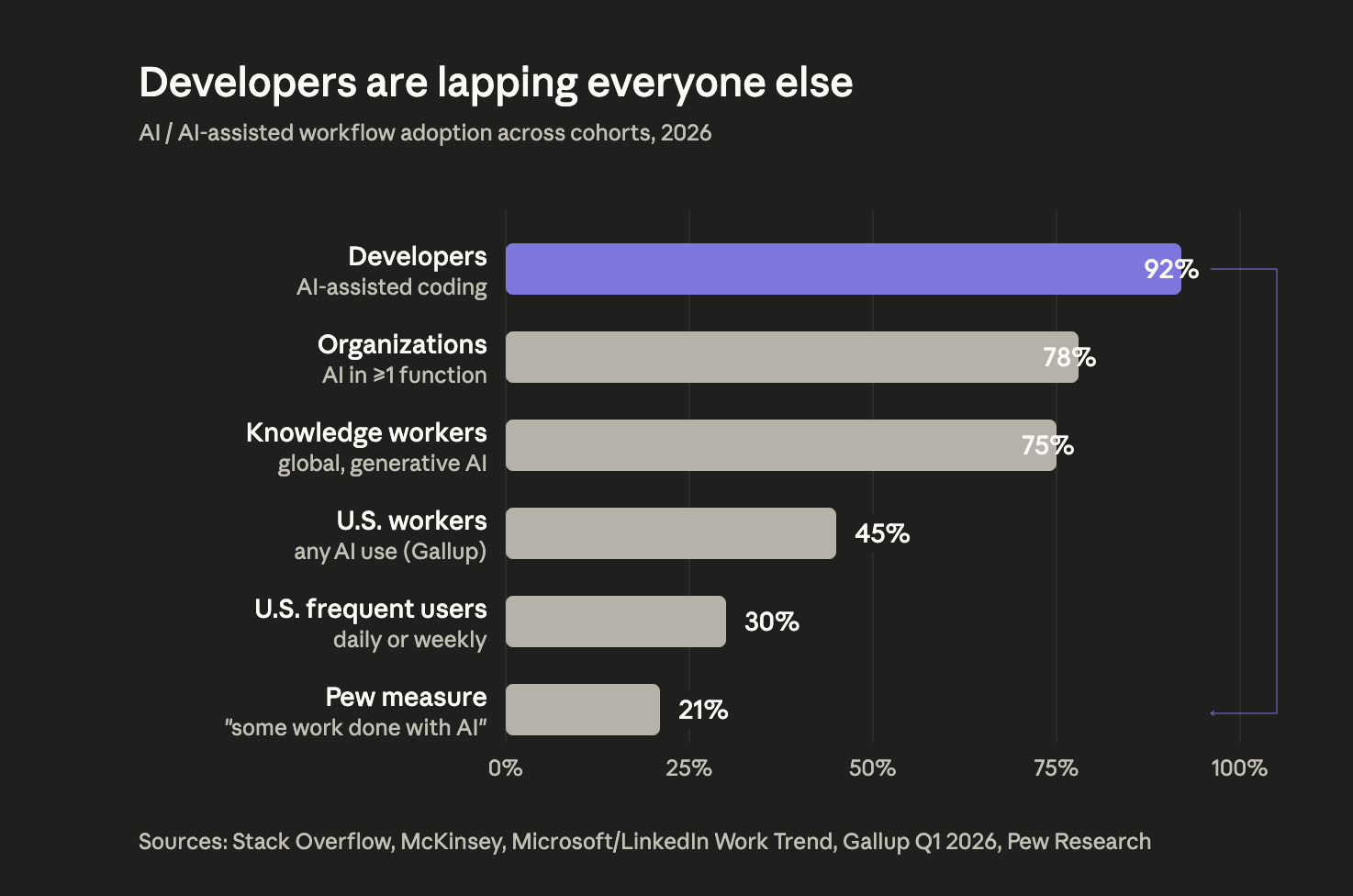
It was always hard to keep up with what’s happening in the tech world. Everything evolved so quickly that you needed to constantly learn just to maintain the same position. But this time, for the first time ever, I was unsure whether I would keep up at all.
The flood of news about AI tools, AI adoption, and AI taking over jobs overwhelmed me at first. I had multiple little kids, so the amount of sleep was at an alarming level, and there was never a worse time to process a massive amount of new knowledge and habits, or to change all the possible workflows to keep up with the new demand.
I remember when I got scared that I would be replaced by AI soon, and tons of influencers repeated this all over the place.
Then layoffs started. Every single big corporation started to announce massive layoffs in tech engineering, partly because of AI adoption. My initial thought was: It’s premature.
Hiring highly skilled workers is hard. It takes time, and it takes investment to teach them the business model, its complexity, the culture, and more.
But it happened a lot. Over and over again, so naturally I was anxious. What if we get replaced by younger coders who are quicker at adopting the new tools and workflows?
Then the data came in.
Three things that made me calm again.
There are a few things that made me wonder: wait, what?
1. Layoffs were not what they looked like
First of all, let me make things clear: AI does impact layoffs in big-tech by A LOT.
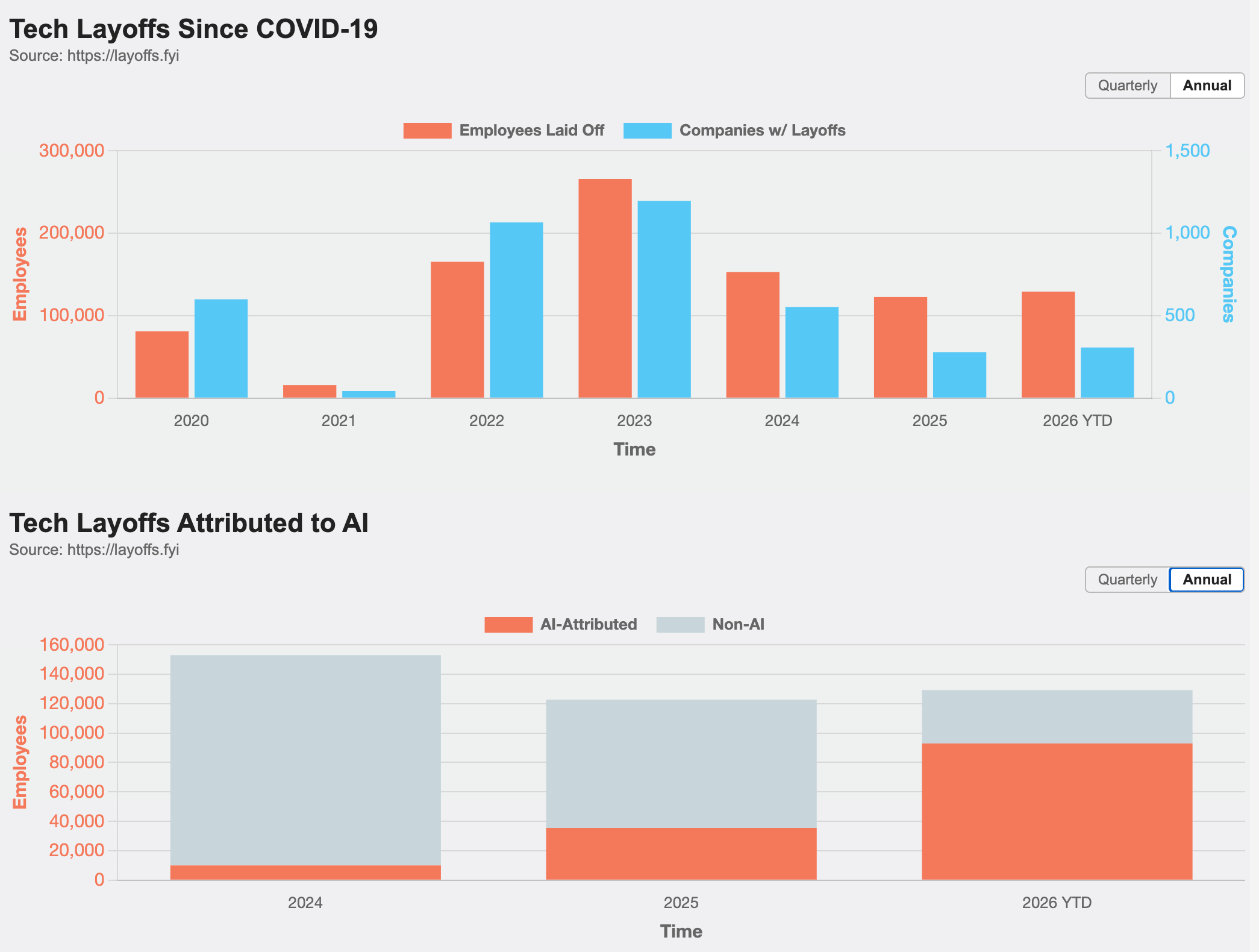
But on closer look, layoffs were not what they looked like at first glance.
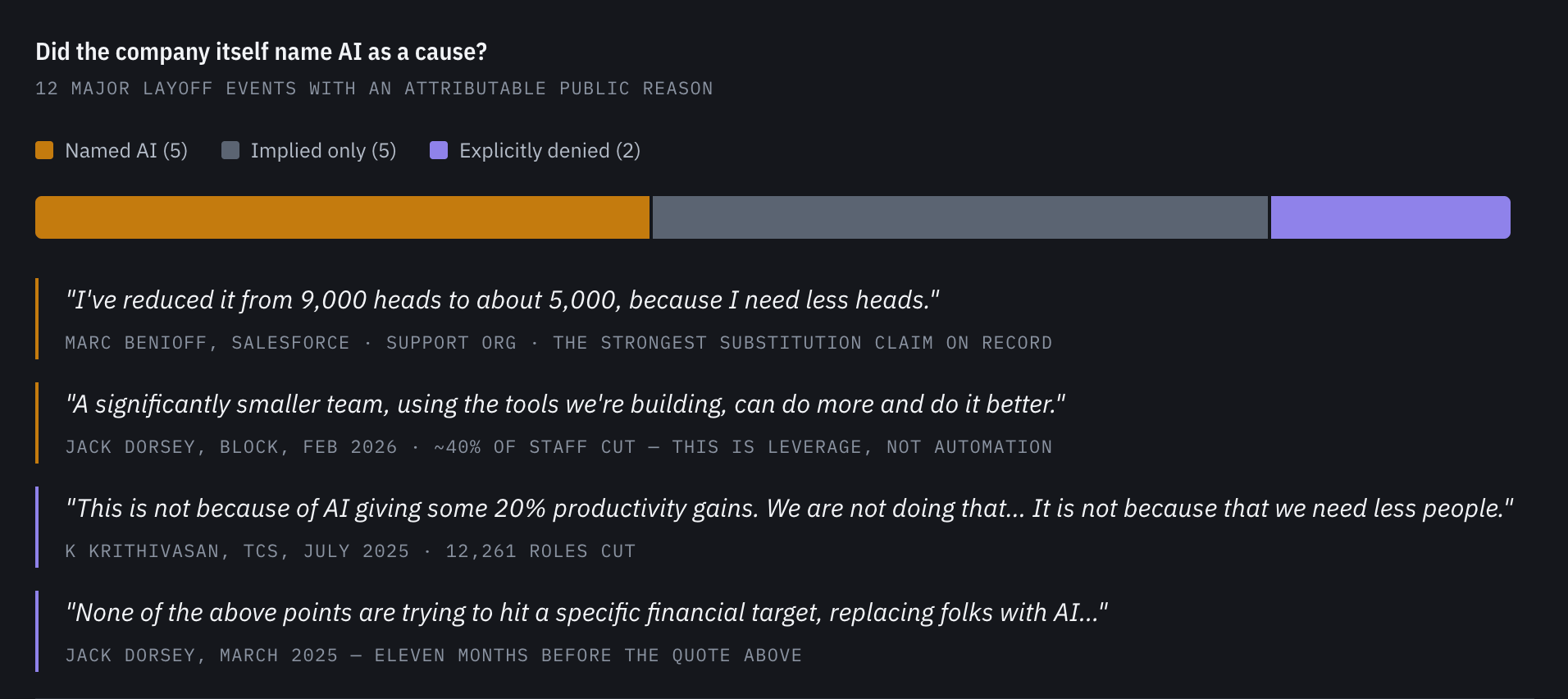
Only five companies explicitly said the layoffs were because of AI. IBM GREW after saying AI replaced 30% of HR; the loudest cutters reallocated staff - they DIDN’T SHRINK.
At the same time, solopreneurs and indie hackers were springing up like mushrooms after rain. My X friend recently posted his thoughts on how the app market got flooded with little tools, doing the same little things. Solving the same simple problems. Coincidence? I doubt it.
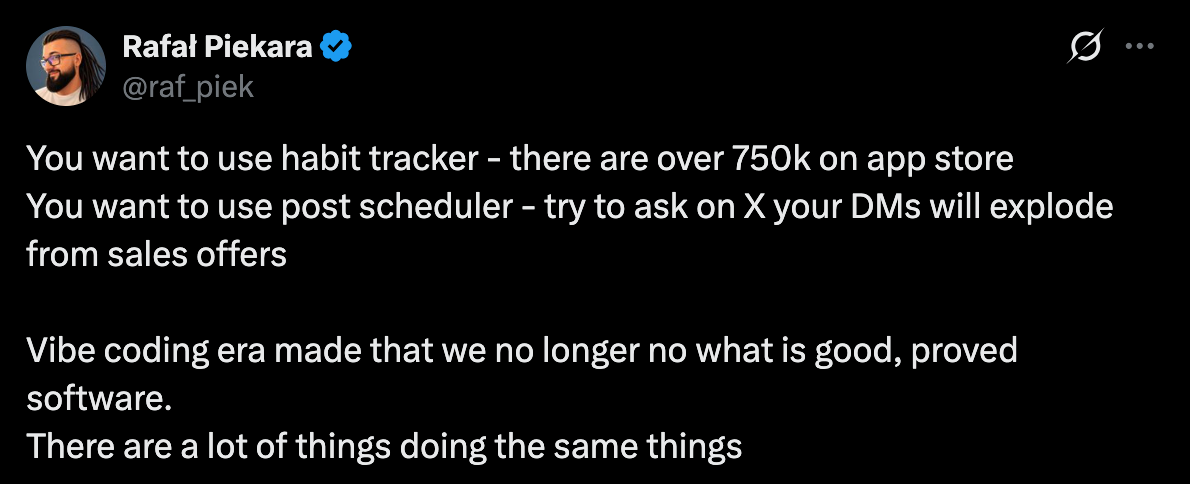
The competition in solving simple problems has exploded to levels never seen before, but that has made complex problems even harder to solve.
And what will it bring us long term?
2. Quality became the bottleneck
We started getting alerts about major companies having outages here and there. The Anthropic status page showed below 99% uptime. Every week we heard about a data breach or a major outage.
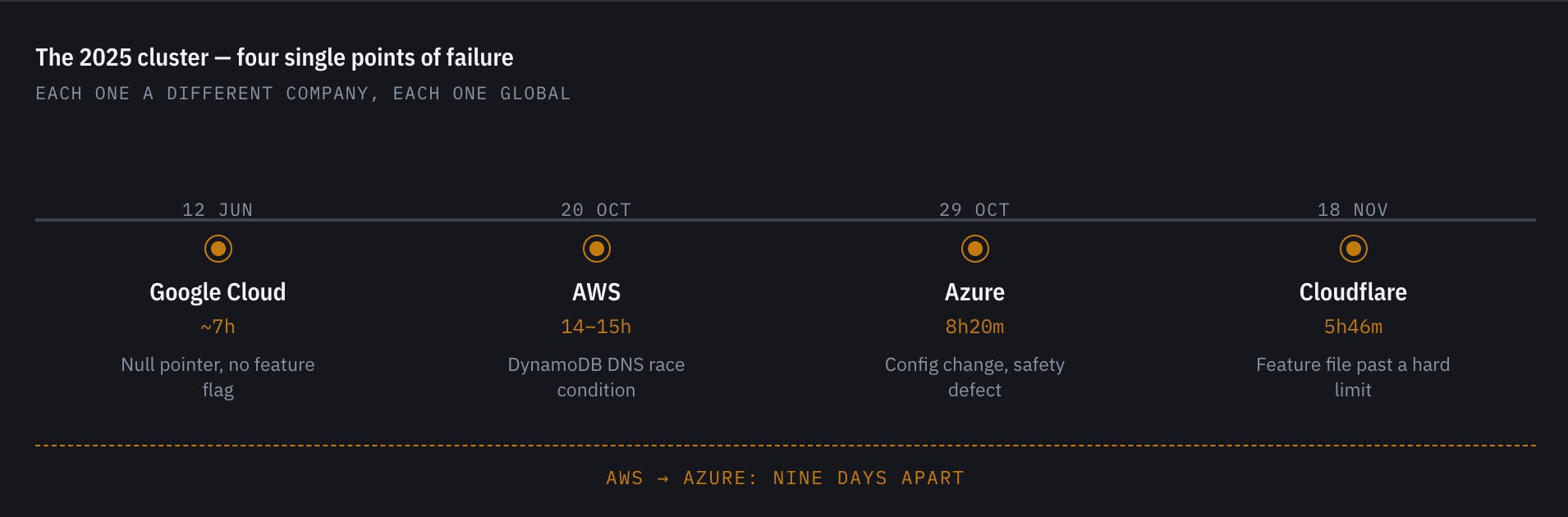
There are fewer incidents reported nowadays, but when they happen, the impact is more noticeable.
As I’ve already covered in Building is solved, selling is not, developers all over the world got flooded with AI-generated CVE reports. One example is the curl maintainer talking about approximately 20% being AI slop, which resulted in a month-long Summer of Bliss.
While you may see hundreds of thousands of habit-tracker apps in the App Store, there are things that cannot be halfway delivered or half-broken.
Imagine that some clients require contracts where penalties for downtime can be pretty high. In those companies, code reviews became the bottleneck, because somebody needed to sign off on the features and take responsibility for them.
AI helps a lot with the labor, but can’t ensure correctness. We need humans. Experienced humans, with good contextual memory and an understanding of the business and service dependencies, who never lie about having read the docs.
NLnet Labs & CEO of AuraSpark wrote articles about the importance of preserving the skills needed for quality not to drop, and about how the sudden urge to automate everything makes people struggle to think.
junior employment fell roughly 9 percent within six quarters relative to nonadopters, while senior employment kept right on growing
Seniors are needed. More than ever. And they will be needed even more.
3. Students doing worse at school
The trend to lay off everyone in the urge to automate everything seems to be reversing, or at least slowing down.
But there is more on that. The PISA 2025 Report shows that students are doing better homework, but perform 20% worse on exams. The struggle is becoming a real problem, as this affects all domains.
In a few years, the biggest problem could be hiring anyone who is able to keep AI hallucinations on a tight rein. Already, the number of duplicated lines reviewers need to deal with is growing rapidly.
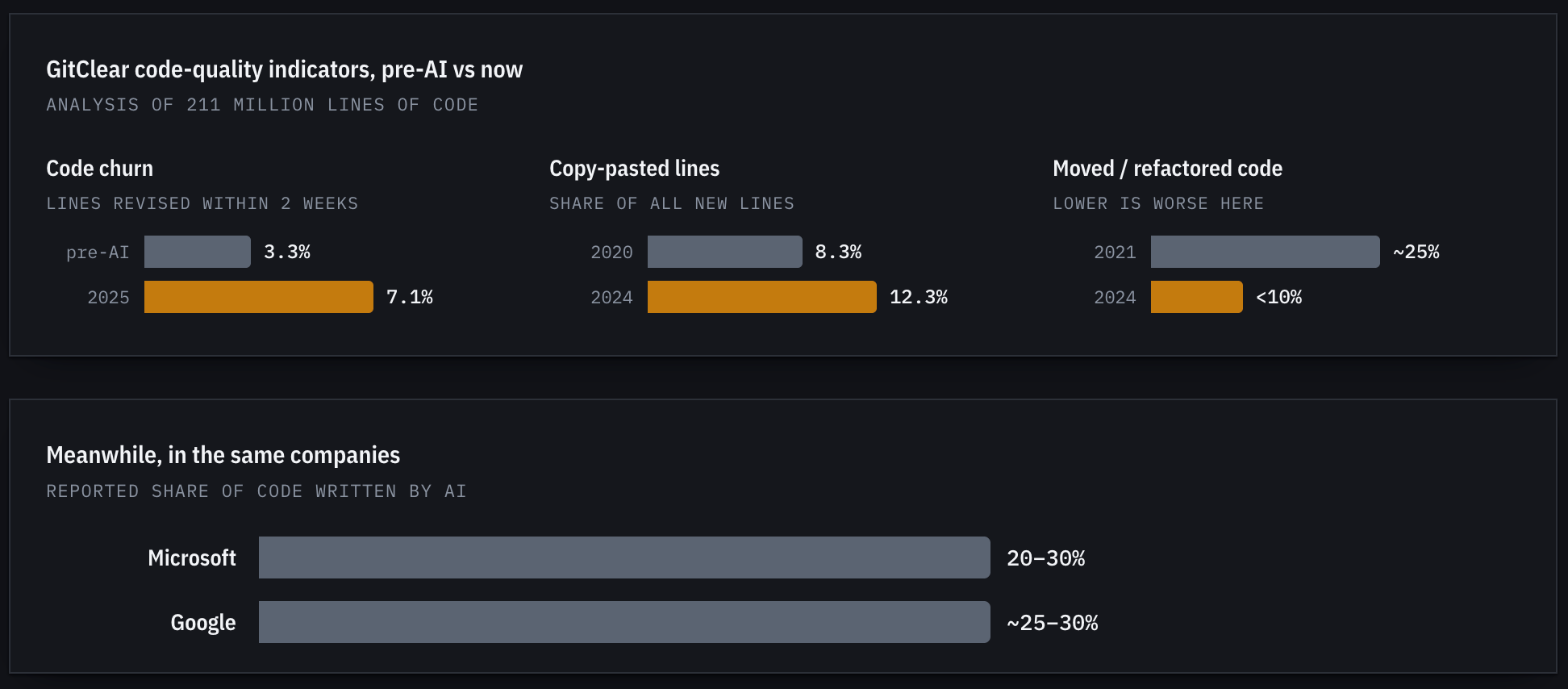
And what will happen to us, seniors, who need to review all the code that degrades in quality but increases in duplication?
So what does it mean for you?
Take a breath, and calm down. Then let me know what your thoughts are about this topic. If you’ve been doing well in your job, there is a good chance you’ll do well in the future. Your skills, your ability to think deeply, overcome issues, and critically look at the designs without the urge to save tokens - are becoming more and more important.
The ability to plan thoroughly, step by step, chaining conclusions, will make you an AI power user who will need to teach younger folks the right approach.
And finally, if you choose the path of building something on the side, you’ll be able to tackle harder problems than most people.
Take care, and if you’re still unsure, reach out to me, I’m happy to talk about these topics!