

There is a particular kind of silence that happens around 9:15 a.m. on a Monday, when the dashboards start lighting up and someone in the channel types “anyone seeing this?” and you already know the answer.
That silence is the entire bill for everything you shipped on Friday.
For the last eighteen months, the loudest message in our industry has been:
it doesn’t matter.
Vibe code it.
Prompt your way through.
Ship it Friday, fix it never, the model will handle the rest.
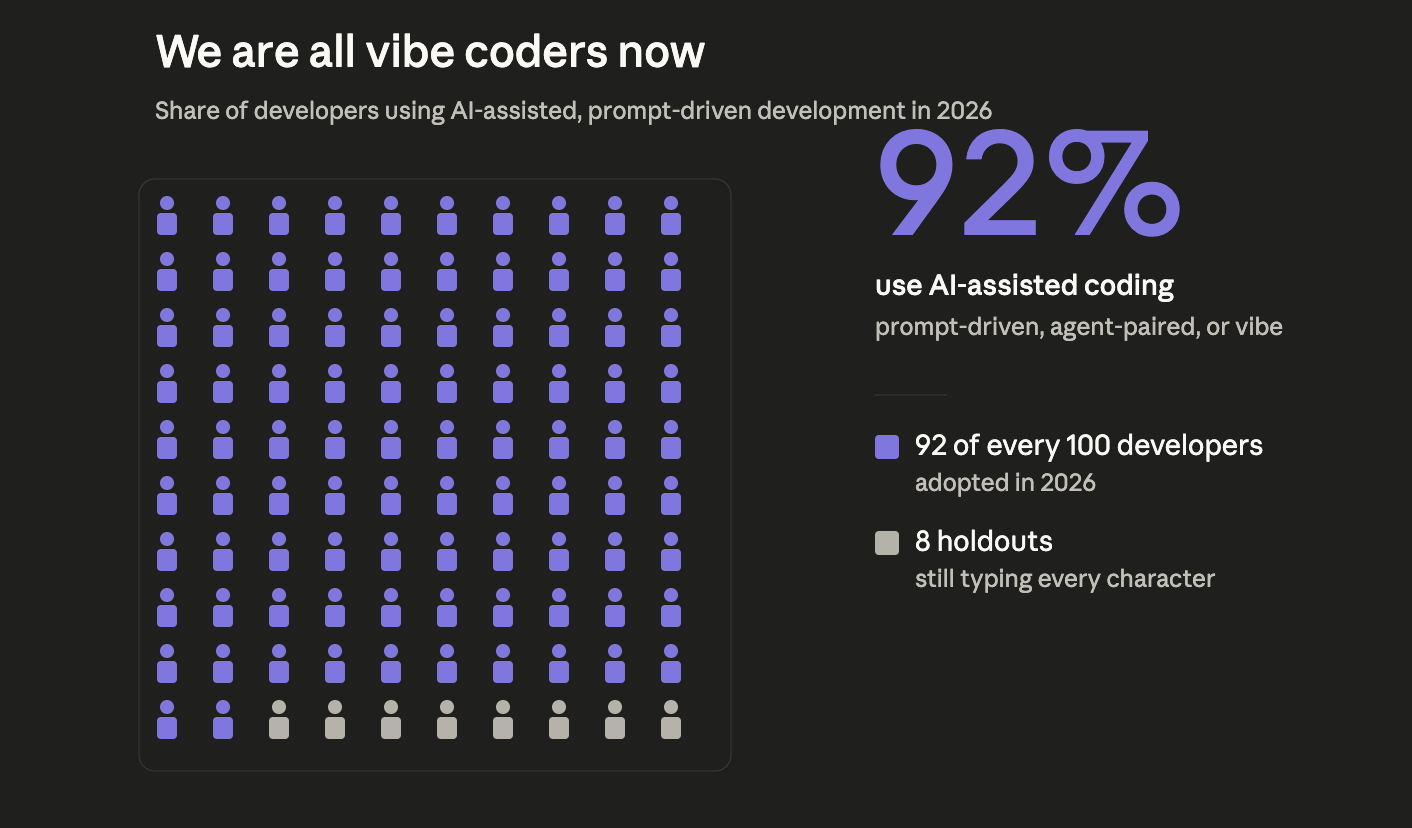
Andrej Karpathy coined the phrase “vibe coding” almost as a half-joke, and the half that wasn’t a joke became a movement. Ninety-two percent of developers in 2026 have adopted some flavor of AI-assisted, prompt-driven development. We are all vibe coders now.
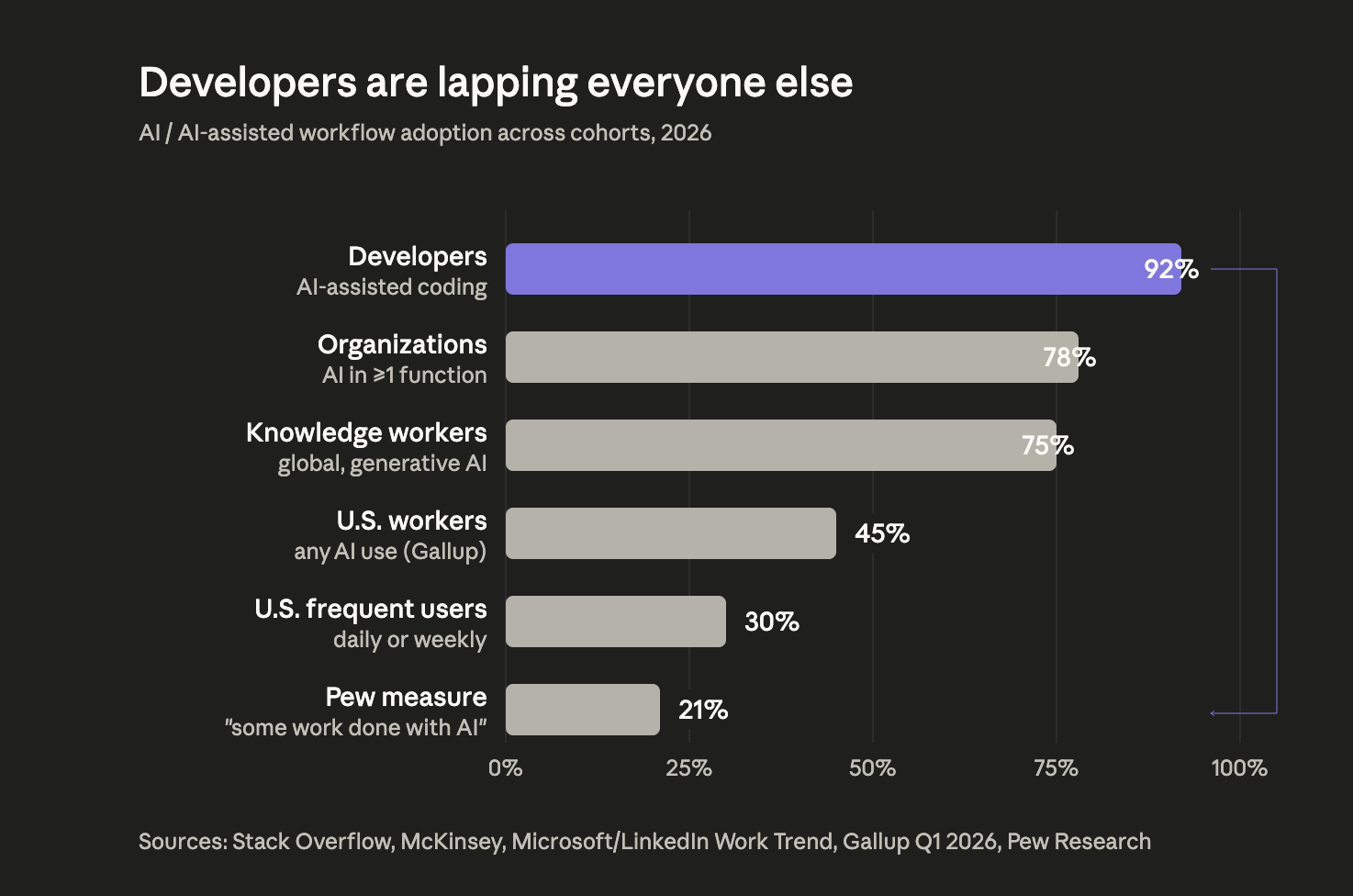
It looks ridiculous when we compare it to overall adoption between sectors. Developers are lapping everyone.
Except the bills are coming due.
A Medium analysis published this April put the numbers in front of us.
Forty-one percent of code generated by AI assistants gets churned - rewritten or thrown away - within two weeks of being merged.
Duplication is up four-fold compared to pre-2024 codebases
1.5 million record API key breach traced back to vibe-coded applications - and that’s the most expensive lesson of the year so far.
The pattern the model produced was not wrong. It was generic. And the developer who shipped it did not know enough about API key handling to recognize what was missing.
That last sentence is the entire essay. Let me show you why.
Vibe coding optimized for the demo, not the system
Vibe coding is, in the cleanest definition I can give you, the practice of treating the model as the engineer and yourself as the product manager.
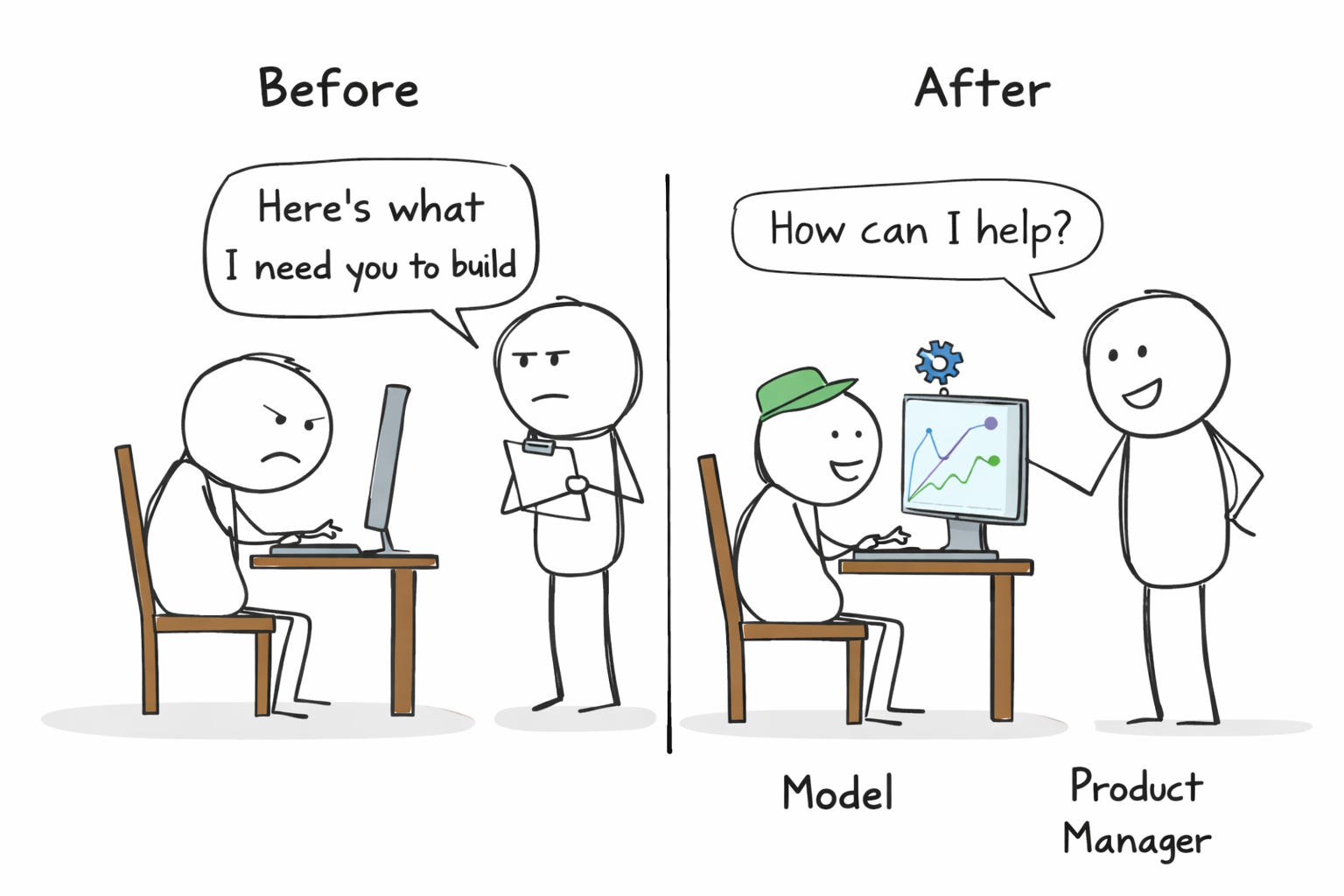
You describe what you want, the model writes it, you skim it, you ship it.
If something breaks, you describe the break, the model patches it, you re-skim, you re-ship.
For a certain class of problem, this works astonishingly well. Throwaway scripts. Internal tools that three people will use.
Weekend prototypes that are really just thinking-out-loud in code form. I have built dozens of these in the last year. So have you.
The trap is what happens when one of those weekend prototypes gets traction.
Vibe coding does not optimize for the things that distinguish a prototype from a system. It does not optimize for what happens when the second user logs in at the same moment as the first. It does not optimize for what happens when the third-party API rate-limits you on a Tuesday afternoon. It does not optimize for the migration you will need to run six months from now on a table that suddenly has fifty
thousand rows in it.
It optimizes for the demo. And demos do not survive Monday morning
production traffic.
The 4x duplication number is the smoking gun
Read past the headline figure - 41% churn - and look at the duplication number. Four times the duplication of pre-2024 codebases. That is not a quality metric. That is a forensic fingerprint.
Duplication at that scale only happens when nobody in the loop knows what already exists in the codebase.
The model does not know because the model has a context window, not a memory.
The developer does not know because the developer has been outsourcing the act of knowing for the last eighteen months.
I have been writing code for fourteen years. I am currently a Staff Ruby Engineer for a Singapore-based client, and the single most valuable thing I do in that role is not write code. It is to remember.
I remember which service owns which queue.
I remember why the retry logic on the payments path was rewritten in 2024.
I remember the conversation we had about the index that nobody wanted to add and the production incident eight months later that proved we should have added it.
That memory is not nostalgia. That memory is leverage. It is the reason a senior engineer can walk into a meeting and save the team a week of work in fifteen minutes.
And it is exactly the thing vibe coding cannot do for you, no matter how sophisticated the model is, because the relevant context is not in any document the model has ever
seen.
For two years, that kind of memory looked like overhead.
In 2026, it is the moat.
Why the senior engineer era is back
The discourse this spring has shifted hard. The JetBrains developer survey published this month tells the story from a different angle:
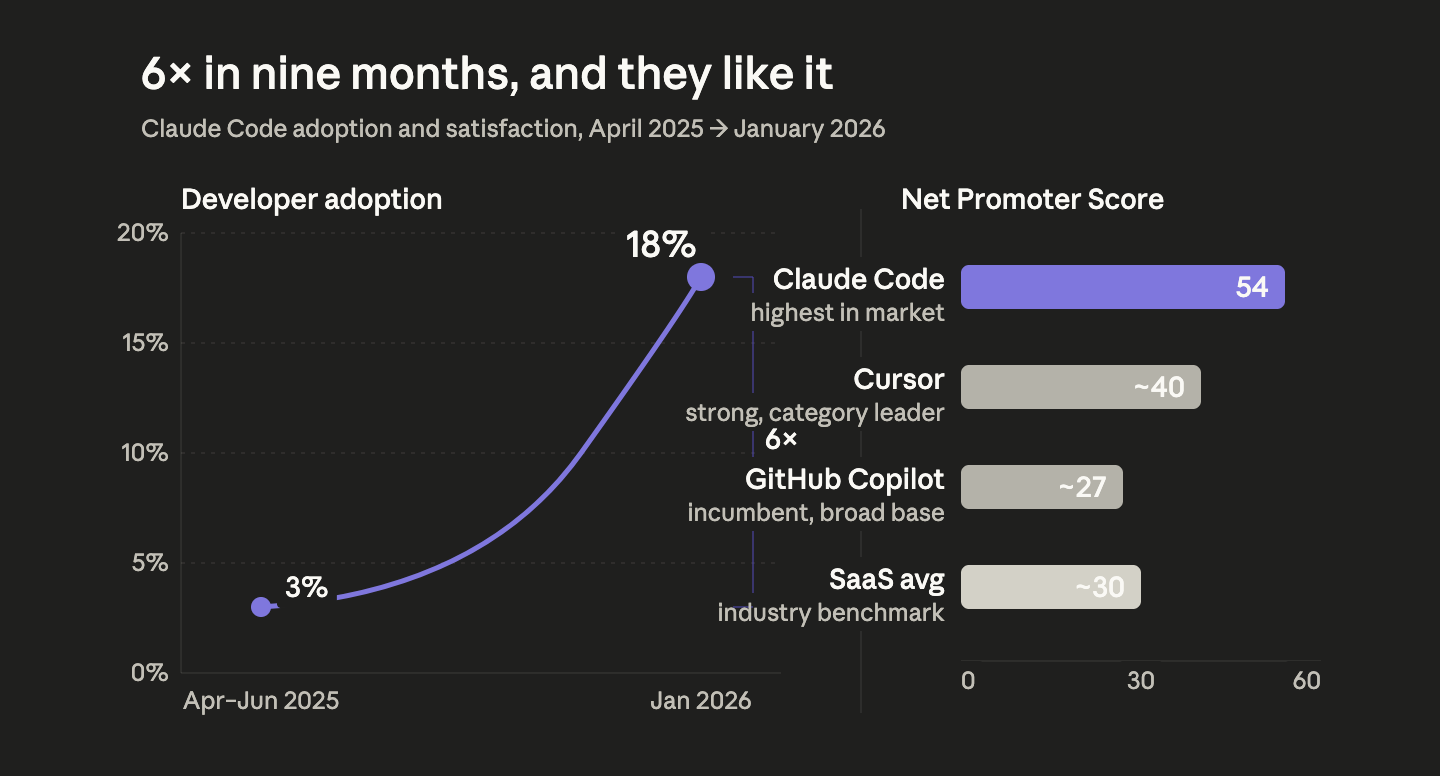
Claude Code’s adoption has climbed from 3% to 18% in nine months, with an NPS of 54 - the highest in the market. And the developers driving that adoption are not juniors looking for a shortcut. They are the senior engineers who already know what good code looks like and have figured out how to use the model to write more of it without sacrificing the thing that made them senior in the first place.
The pattern that keeps showing up in every honest postmortem I read is the same one.
The engineers getting the most out of AI in 2026 are the engineers who could have written the code themselves and chose not to, because they knew what to ask for, what to verify, and what to throw away.
The engineers getting hurt are the ones who let the model fill in the parts of their judgment they had not built yet.
That is not a story about AI being bad.
That is a story about leverage being the wrong word for what vibe coding actually was. It was not leverage. It was a loan. And the interest just came due.
If you are 30+ and quietly worried, read this part twice
If you are reading this and you are a senior engineer who has spent the last year quietly worried that your fourteen years of pattern-matching, your scar tissue, your habit of asking “but what happens at 3 a.m. when this fails” - that all of it was about to be commoditized by a model with a better context window - I want to tell you something specific.
You are early.
You are not late to AI. You are early to the version of the industry where the people who can actually verify what the model produces become the most valuable engineers in the room. The 41% churn number is going to get worse before it gets better. The duplication number is going to get worse before it gets better.
And every one of those numbers is a job posting waiting to be written for someone who can read code and tell whether it is real.
The thing you have been told for two years - that your experience is depreciating in real time - was never true. It was a sales pitch from people who needed you to feel that way so the tools could be priced as a replacement instead of a complement.
Your experience just became the scarce resource.
The question is what you are going to do with it.
The honest part
Here is the honest thing I will tell you, because the only currency I am building this newsletter on is honesty: I have been writing code for fourteen years and my current online business has made $5 to date. That $5 is not a metaphor. It is a number on a Lemon Squeezy dashboard I look at mornings.
The reason I am telling you that is because the gap between “fourteen years of senior engineering” and “$1 of online revenue” is not a code gap.
It never was.
It is exactly the gap the vibe coding crowd was selling a fake bridge across. The actual bridge - the one I am walking across right now in public - is the thing nobody wants to talk about because it is unsexy and slow and involves
writing landing pages
email sequences
posting on platforms where the engagement is humbling.
That is why I built automateideasai.com - an AI-powered tool that validates your product idea against market fit, competitors, and audience before you write a single line of code. Free to explore, pay to go deeper.
Because the actual bridge between “fourteen years of senior engineering” and “$1 of online revenue” is not building faster. It is knowing what to build. That is the step most of us skip, and it is the one that turns vibe-coded weekends into actual businesses.
If you have been waiting for the right moment to stop vibe coding and start building something of your own that survives Monday morning, the moment is now. The senior engineer era is back. Your scar tissue just got expensive again.
The only question left is whether you are going to validate the idea
before you build it: https://automateideasai.com