

This is Part 2 of the 3-part series about building my visual brand with AI.
Why - inspiration, motive
How - what steps I’ve taken, the biggest challenges and how I solved them
How you can build your own
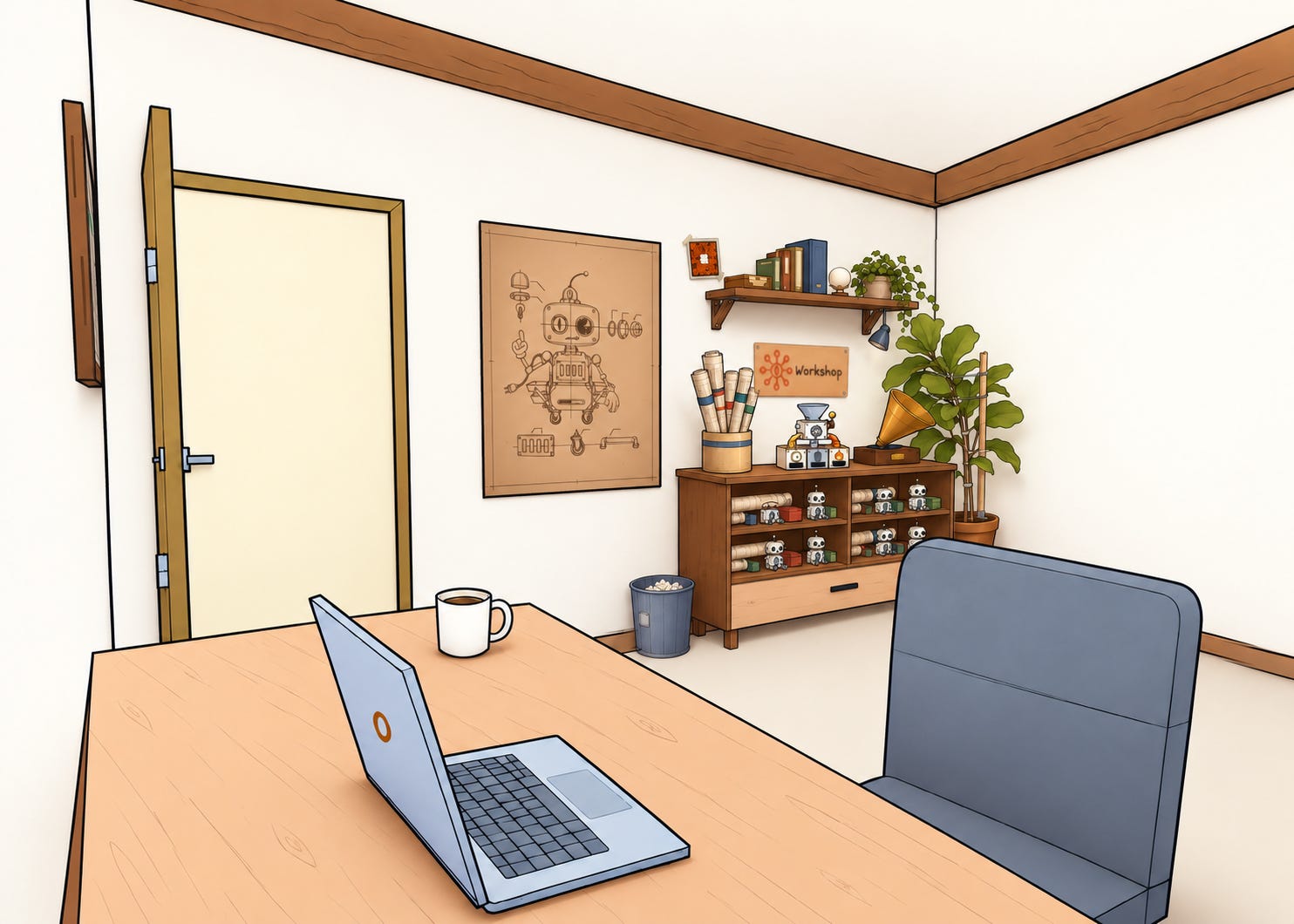
Last time I left you with the AI drift. The more references you add, the more wrong new files will be.
The validator took care of that. I created canonical image references, and rigoristic brand rules, then the validator engine, and I am already happy about the results.
Then I started to make comics for real, and the biggest challenges were not where I expected to have them! Like, at all.
Usually, when you think about AI agent, you think it has just the little context to refer to.
Funny thing is, while drawing exactly that page, my own AI agent did the opposite. It put my WHOLE library on its desk.
Challenge 1. My AI read the whole house to draw one room
My brand library lives in my Obsidian vault. There are character notes, 10 spec files, colour notes, workflows, approved scenes. At the root there is an AGENTS.md that says, more or less: before you do anything here, read read every rule file, resolve character links to read their notes.
That file is for agents that maintain the library, and for them it was a good call.
Then I asked Codex to draw the art for Commic Issue 2’s first draft. Based on the canonical images.Four images, run inside the vault, in parallel.
And it did what every good agent does. It found AGENTS.md and obeyed. It read the specs. It read the notes. Then it started its own validators.
The bill for four first takes:
about 6 million tokens
the entire 5-hour Codex window
15% of my weekly limit
and a usage-limit was hit before I could apply any fixes.
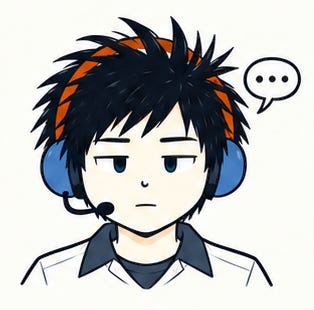
And the takes still needed fixes anyway. At that price, a weekly comic is just impossible.
So I gave it a room, not the house.
Here is how.
The Throwaway room
I ran the next job in a throwaway folder outside the vault, built fresh for this one job and deleted after. It contained only things required for a task:
master-prompt.mdthe single file prompt built from all the spec files:brand/: the brand rules (colors, lines, style, lighting)notes/: the note of every character, artifact and clothing and location piece in this scene, nothing else
images/: their canonical sheets, emotion images and the empty location shotSCENE.md: the story, then one section per panel with its file name and the references it usesits own
AGENTS.md, five rules long
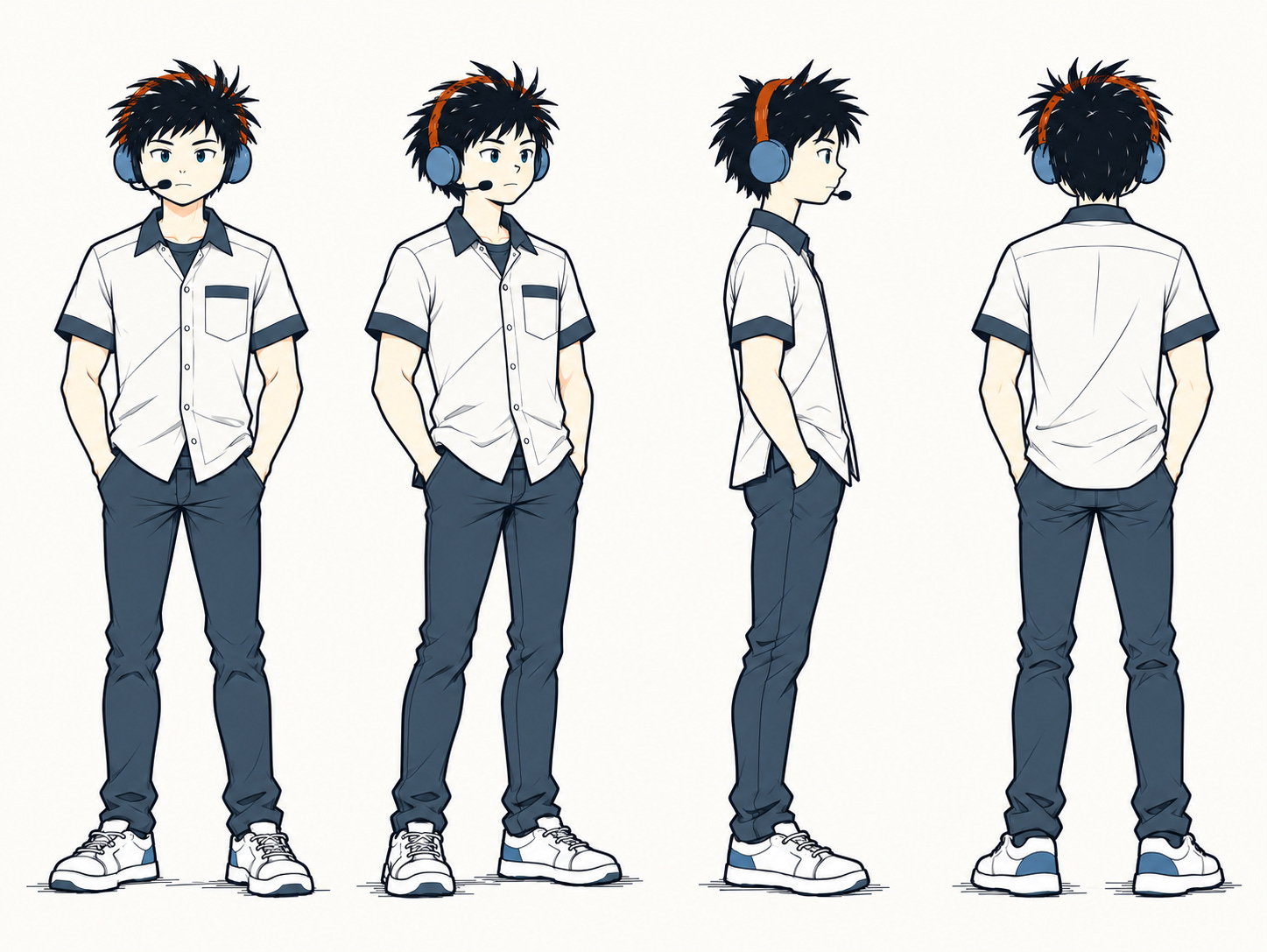
That new AGENTS.md is the big part.
Everything you need is in this folder. Never read, list or search anything outside it.
Read every text file in one go. Don’t open the images yourself, they go to the image generator.
For each panel: write one prompt, call image generation once with exactly the references that section lists, save it to
out/.Do not validate, review or redraw anything. Do not spawn agents.
Reply with the paths of the files you made.
Then it stops.
The redraw of three panels in that room: 748k tokens, 685k of them cached. 4% of the weekly limit.
Learning: Before you hand an agent a narrow job, build the smallest folder that holds everything that job needs. Run it there. Throw the folder away. Keep single prompt so agent actually will read it.
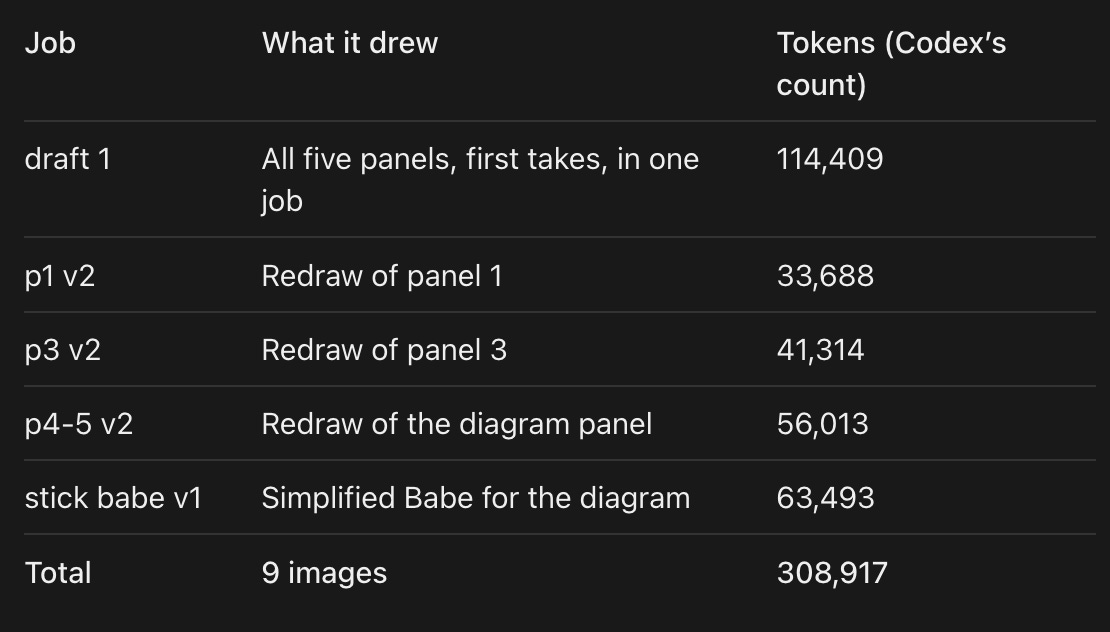
To compare, here is the API equivalent cost for drawing full Issue 5 (Yep, upcoming!).
The Log
I’ve promised you the steps taken so far, so here is what it took to get there:
Step 1: Foundations
Colour palette note.
Visual brand hub
First character notes for Geek and Babe.
Geek’s stick-figure emotion sheet.
After the “instantly recognizable brand” article (Mia & Pinkie):
specs: Lighting, Line and Form, Typography, plus the Validation Checklist and the worldbuilding guide;
character notes for Bonnie, Bobi and Nonnie, the design workflow and the validator note.
Step 2: Making it measurable (18–19 Oct)
Real measurement of the Geek office, then a simple
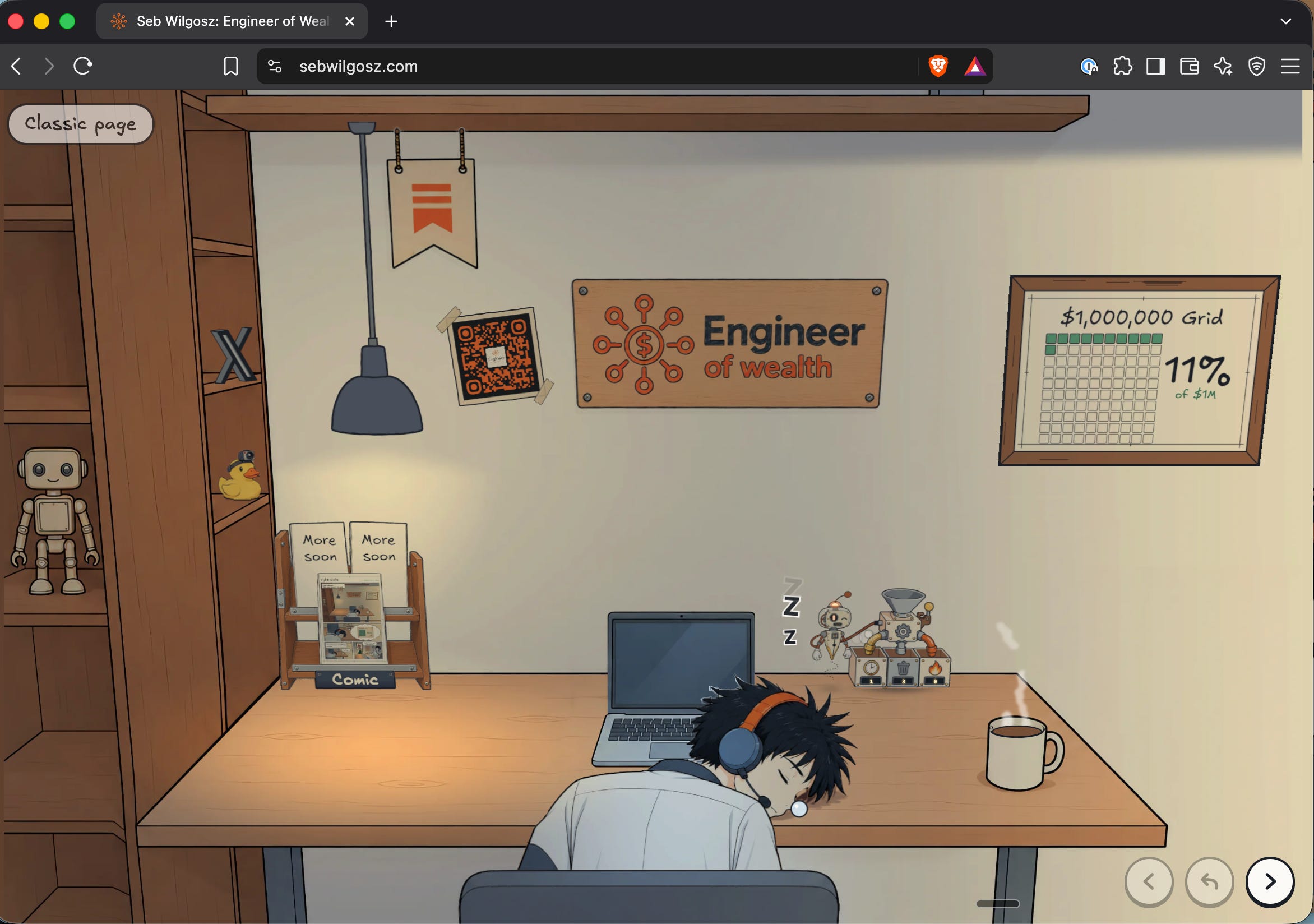
three.jsroom with six fixed camera shots. Created Interactive Office out of it. Whatever drifts, it’ll be best visible on the real website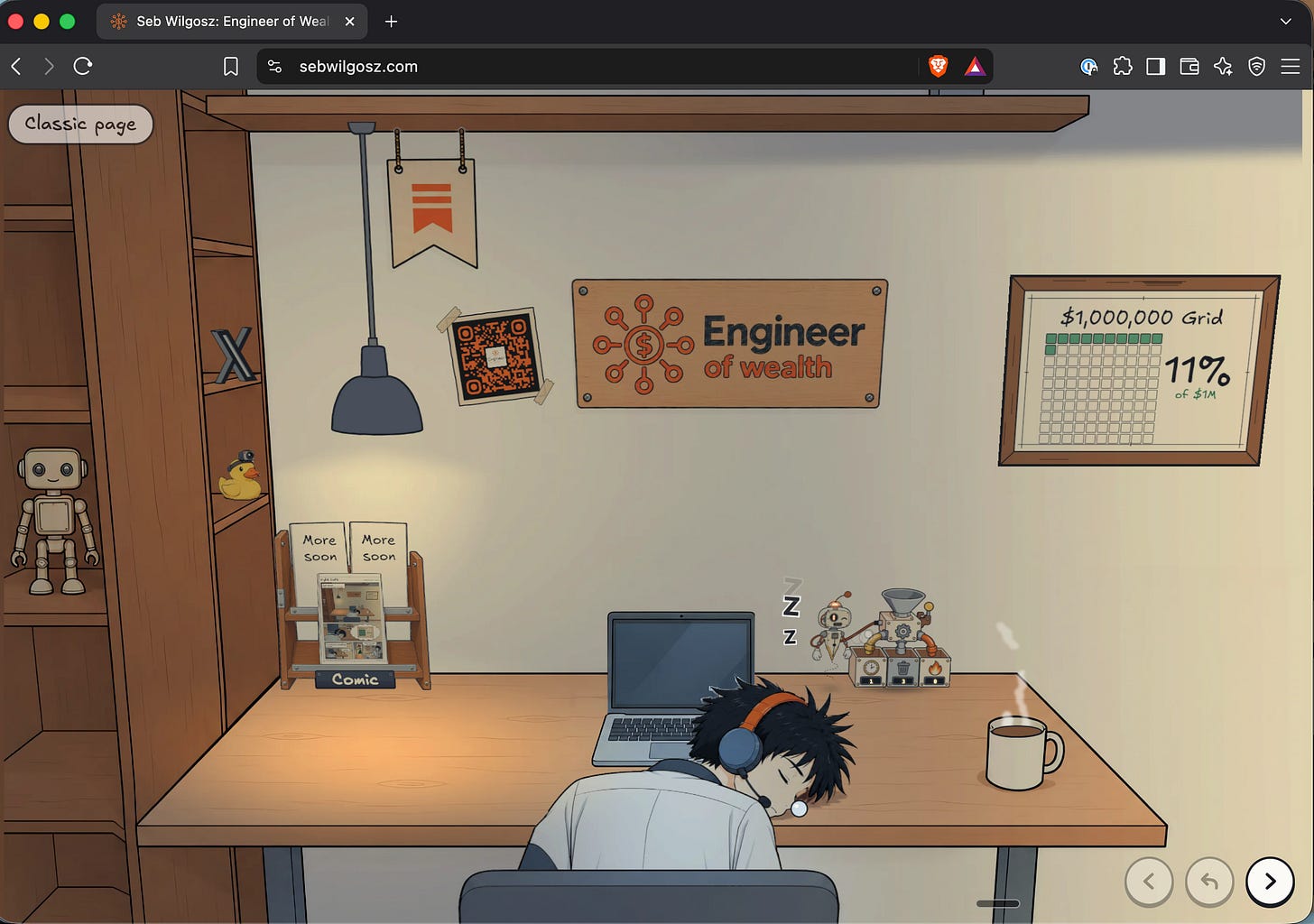
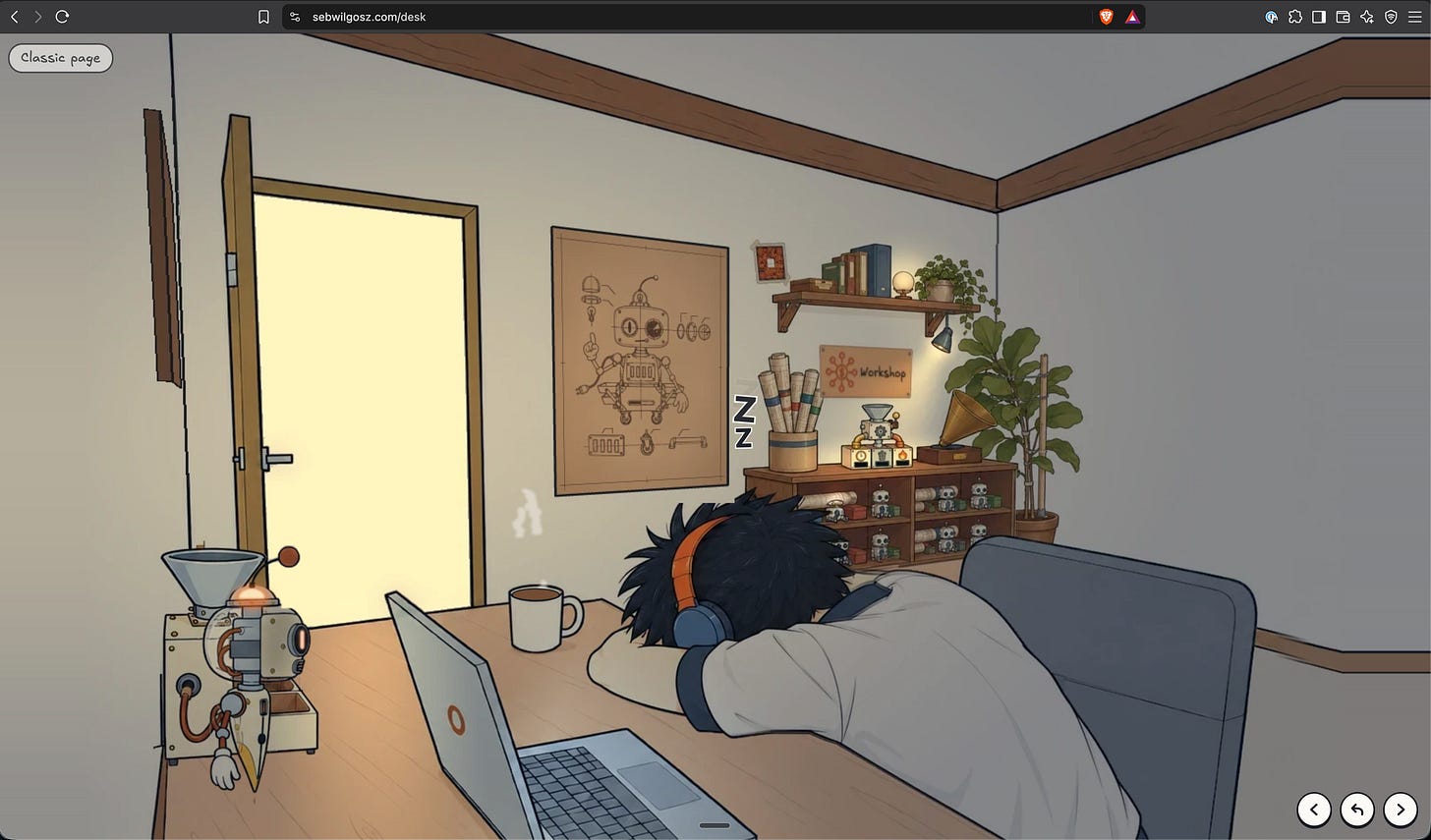
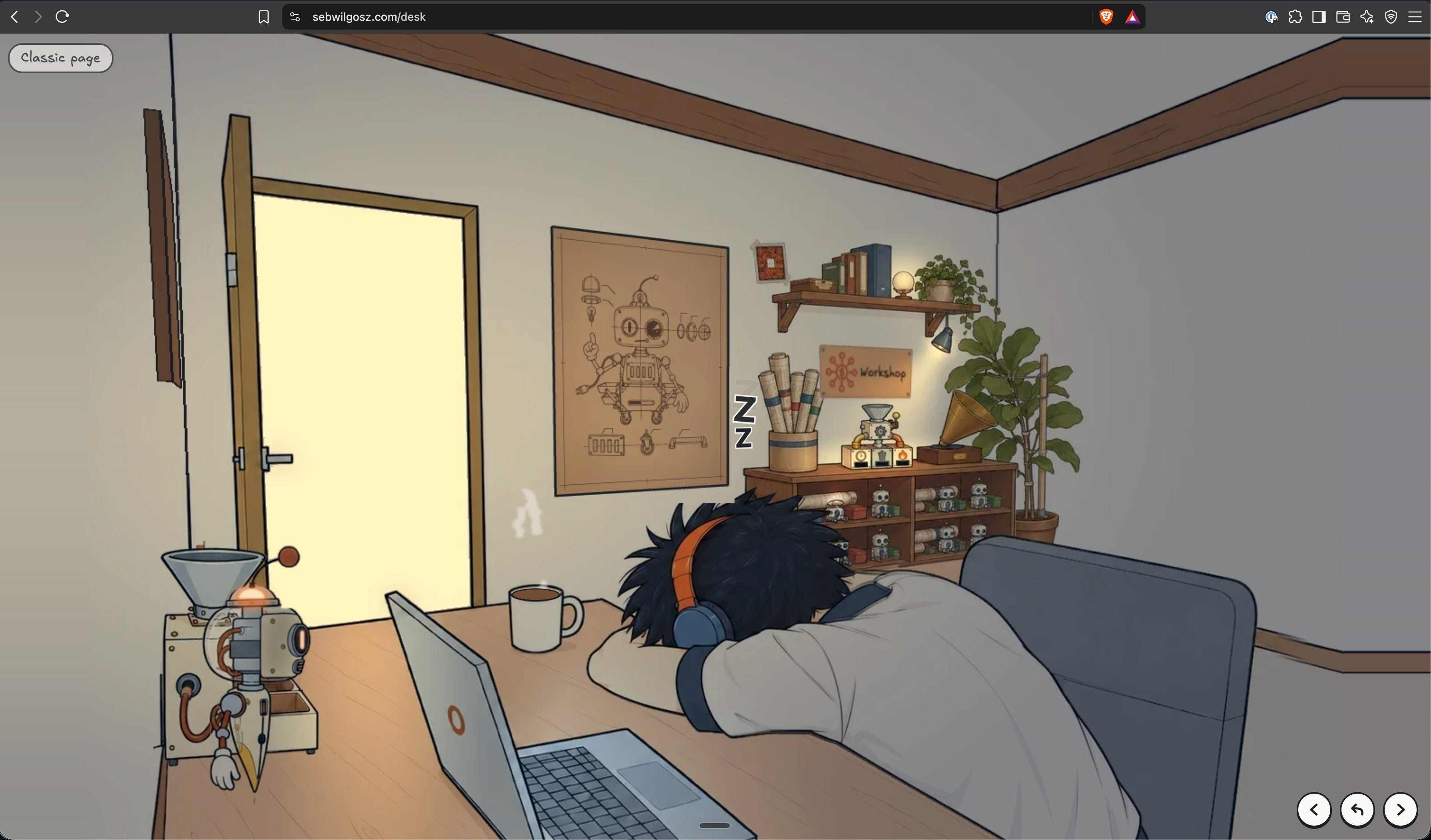
You can check it at: https://sebwilgosz.com/desk New validators
check colours after every image generation.
Lighting pass: a flat scene is lit from a JSON rig and never redrawn
Visual stack planned:
CVO plugin,
brand MCP
Brand Studio.
First Ghost robot concept.
The world grows
light editor and presets,
text-only mega-prompts,
LeverBot agent characters
Current State
Workshop view - interactive office that evolves as the story goes.
BullpenStudio - the comic generation factory as a separate app.
engineerofwealth.com - comic reader, comic exporter.
Comic Issues 1-5 ready. First issue here.
Summary
Currently I’m able to create consistent comic images as quickly, as I have the story worth showing. It took weeks to get there, and it took weeks of careful measures and images alignment, with precise scripts for validating images, but now I can confidently tell, I have reliable tooling to create something unique here.
Tell me, what’s the biggest challange you hit so far when working with AI toolings?